Hydraulic Cylinder Repair vs Replacement: Which Option Saves You More Money?
Hydraulic cylinders are essential components in heavy machinery, powering equipment used across construction, mining, agriculture, and industrial operations. Over time, wear and harsh working conditions can lead to performance issues or mechanical damage. When this happens, operators often face an important decision: should they choose hydraulic cylinder repair or complete replacement?
Understanding the difference between repair and replacement helps businesses make cost effective decisions while maintaining equipment reliability. In many situations, timely servicing or a hydraulic cylinder rebuild can restore performance without the higher expense of installing a brand new unit.
What Causes Hydraulic Cylinder Damage
Hydraulic cylinders operate under intense pressure and demanding environments. Over time, several factors can contribute to damage and performance issues.
Seal wear is one of the most common causes. As seals deteriorate, hydraulic fluid may begin to leak and pressure within the system can drop. Contamination is another major issue. Dirt, metal particles, or debris entering the hydraulic system can damage internal surfaces and restrict fluid movement.
Rod bending can occur when equipment is overloaded or when cylinders operate under misaligned conditions. This puts uneven stress on the piston rod and can eventually affect cylinder operation. Internal scoring, which refers to scratches or grooves inside the cylinder walls, may also develop due to contamination or prolonged wear.
Identifying these problems early allows technicians to perform hydraulic cylinder repair before the damage becomes severe.
When Hydraulic Cylinder Repair Is the Best Option
In many cases, repairing a hydraulic cylinder is the most practical and economical solution. If the damage is relatively minor and the structural integrity of the cylinder remains intact, repair work can effectively restore performance.
Common situations where repair is suitable include seal replacement when leaks are caused by worn seals, minor rod damage that can be polished or straightened, and internal wear that can be addressed through component servicing.
Choosing hydraulic cylinder repair in these situations offers several advantages. Repair work typically involves lower costs compared with full replacement. It also provides faster turnaround times because technicians can restore the existing cylinder rather than sourcing a new one. Most importantly, repair reduces equipment downtime and helps machinery return to operation quickly.
When Replacement Is Necessary
Although repair is often effective, there are situations where replacement becomes unavoidable. Severe structural damage is one example. If the cylinder body has experienced major deformation or structural weakness, repairing it may not be safe or reliable.
Cracked cylinder barrels are another serious issue. Cracks compromise the ability of the cylinder to maintain hydraulic pressure and can lead to sudden failure during operation. Excessive corrosion is also a concern, particularly in environments where machinery is exposed to moisture, chemicals, or harsh conditions for extended periods.
In these cases, replacing the cylinder may be the safest and most reliable option.
Cost Comparison: Repair vs Replacement
Cost is one of the most important factors when deciding between repair and replacement. In most situations, hydraulic cylinder repair cost is significantly lower than purchasing a completely new cylinder.
Repair work generally focuses on restoring existing components such as seals, rods, or internal surfaces. This approach reduces material expenses and labour compared with manufacturing or sourcing a new cylinder assembly.
Replacement, on the other hand, can be expensive, especially for large equipment cylinders used in excavators, loaders, and heavy industrial machines. The cost of a new cylinder, combined with installation and potential downtime, can place a greater financial burden on operations.
This is why many equipment owners evaluate the rebuild vs replace hydraulic cylinder decision carefully before proceeding.
Benefits of Professional Hydraulic Cylinder Rebuilding
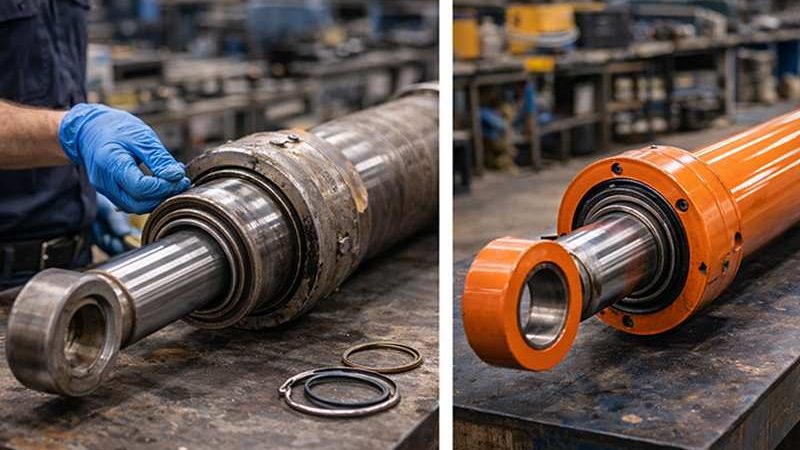
A professional hydraulic cylinder rebuild offers several advantages that go beyond basic repair. Skilled technicians carefully disassemble the cylinder, inspect each component, and restore worn parts to proper working condition.
Rebuilding helps restore the cylinder’s original performance by replacing damaged seals, correcting internal wear, and ensuring the system operates efficiently. This process can significantly extend the operational lifespan of the cylinder, allowing machinery to function reliably for many more years.
Another important benefit is reduced downtime. Experienced repair specialists can rebuild cylinders efficiently, helping equipment return to service faster than waiting for new components to be manufactured or delivered.
Choosing between repair and replacement depends on the extent of damage, the age of the cylinder, and overall operating costs. In many cases, timely hydraulic cylinder repair or a professional rebuild can restore performance while saving significant money.
If your equipment is experiencing hydraulic issues, consulting a qualified repair specialist can help determine the most cost effective solution and keep your machinery operating safely and efficiently.
This event is part of the CSIS Global Sustainability Speaker Series, which investigates the role of the private sector in engaging with the U.S. government, host governments, and NGOs to help address some of the world’s most complex global sustainable development issues.